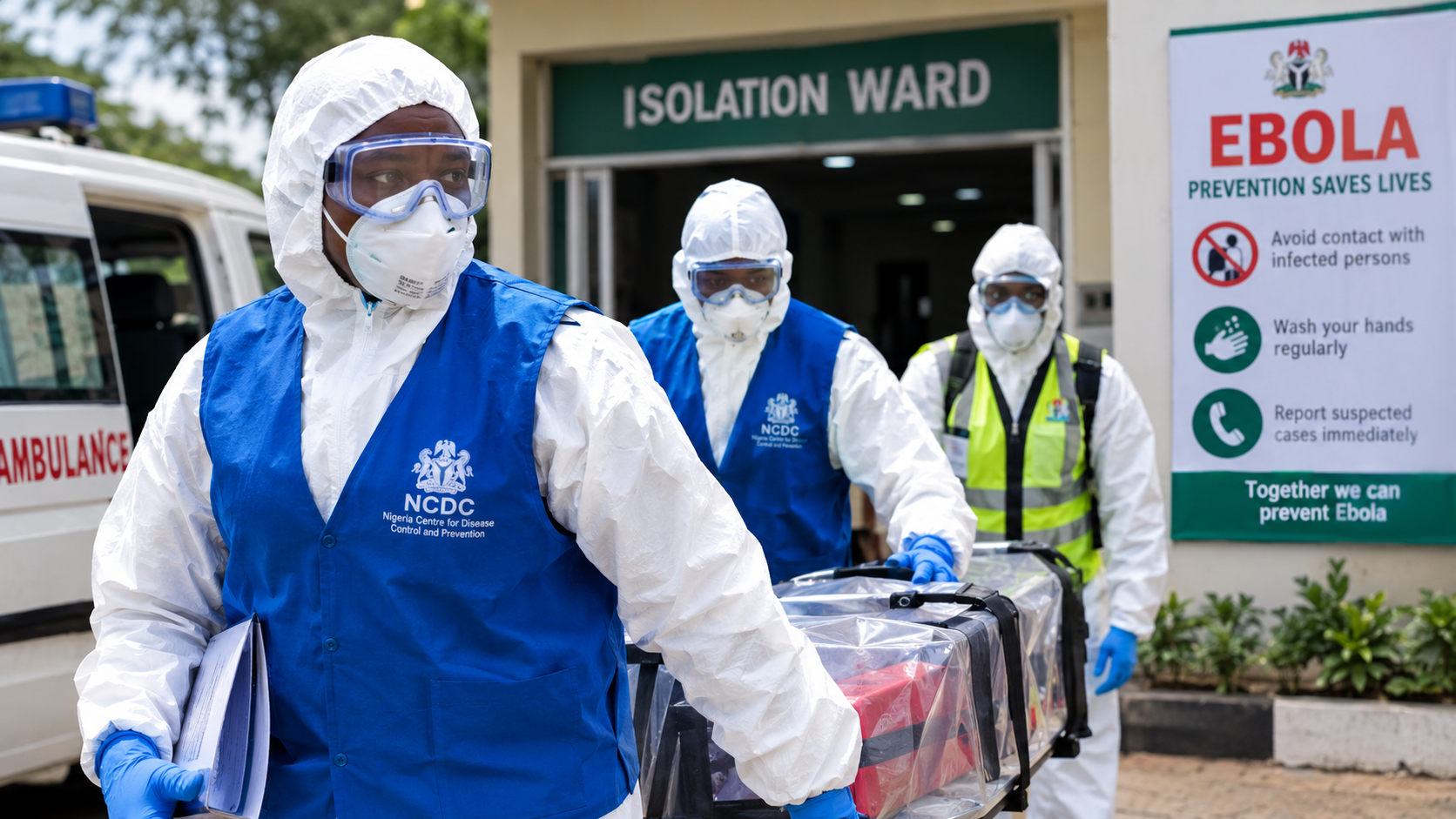
The Federal Government has confirmed an Ebola case in Nigeria after laboratory tests identified the infection in a patient receiving treatment in Abuja, prompting health authorities to begin contact tracing and strengthen efforts to prevent further transmission.
Health Minister Muhammad Ali Pate announced the development on October 20, 2026, saying that the patient was in isolation and receiving medical care.
Authorities have identified 44 people who may have been exposed to the patient and have begun tracing their movements and contacts as part of the public health response.
The announcement has placed renewed attention on Nigeria’s disease surveillance system and its preparedness to respond to infectious disease threats.
Ebola Case in Nigeria: What the Government Has Confirmed
According to reports from Reuters and The Associated Press, laboratory tests confirmed the infection after the patient had received care at a private hospital in Abuja.
The health minister said the patient was in isolation while contact tracing was underway.
The identification of 44 contacts is an important part of the response because health officials need to determine who may have been exposed and whether any additional testing or monitoring is necessary.
However, the identification of contacts does not mean that those individuals have tested positive for Ebola.
Authorities have not established that the infection has spread beyond the confirmed patient. The situation will depend on ongoing surveillance, test results and the findings of the public health investigation.
How the Patient Travelled Before the Diagnosis
Reports indicate that the patient had travelled through Uganda after a business trip to the eastern Democratic Republic of Congo.
Uganda’s Ministry of Health clarified that the patient had transited through Uganda without symptoms and developed symptoms after arriving in Nigeria.
The Ugandan authorities also stated that the country had no confirmed active Ebola cases at the time of its announcement.
The precise location where the patient was exposed to the virus remains under investigation.
It is therefore important not to assume that the infection originated in Uganda simply because the patient travelled through the country.
Investigators will need to establish the patient’s travel history, possible exposure locations and relevant contacts to better understand how the infection occurred.
What the 44 Contacts Mean for Nigeria’s Ebola Response
Contact tracing is a central part of containing an infectious disease outbreak.
Health officials identify people who may have been exposed to an infected individual and assess the level of risk associated with each contact.
Depending on the circumstances, authorities may arrange monitoring, testing, isolation or other public health measures.
The aim is to identify possible infections early and prevent further transmission before cases become more difficult to trace.
For Nigeria, the identification of 44 contacts means that health officials have an important investigation underway.
It does not, by itself, establish that the country is experiencing widespread transmission.
The outcome of the contact-tracing exercise and any additional laboratory findings will help authorities determine what further action is necessary.
Nigeria Strengthens Disease Surveillance
Nigeria’s response comes against the background of earlier efforts to improve preparedness for Ebola and other infectious disease threats.
The Nigeria Centre for Disease Control and Prevention has previously highlighted the importance of early detection, laboratory diagnosis, infection prevention, contact tracing and protecting healthcare workers.
These measures are particularly important when an infection is detected in a patient who has travelled internationally.
Healthcare facilities must be able to recognise possible cases, follow appropriate infection-prevention procedures and refer patients for timely assessment and testing.
Public health agencies also need reliable communication systems so that information can move quickly between hospitals, laboratories and government authorities.
The current investigation will test how effectively these systems work together under pressure.
What Nigerians Should Know About Ebola
Ebola is a serious viral disease that can cause severe illness. Transmission generally occurs through direct contact with the blood or other bodily fluids of an infected person who is showing symptoms, or with contaminated materials.
It is not generally spread through ordinary casual contact in the same way as common respiratory infections.
People should follow guidance from recognised public health authorities rather than rely on unverified social media messages.
Anyone concerned about a possible exposure should seek guidance from a qualified healthcare professional or the appropriate public health authority.
People should not attempt to diagnose themselves or others based solely on symptoms, travel history or online reports.
Healthcare workers are particularly important in the response and must follow established infection-prevention and control procedures when assessing suspected cases.
Will the Ebola Case in Nigeria Affect Other States?
The confirmed case is in Abuja, but the investigation’s scope will depend on the patient’s movements and the contacts identified by health officials.
Contact tracing can extend beyond the location where a diagnosis was made if investigators determine that relevant exposures occurred elsewhere.
At this stage, the identification of 44 contacts should not be interpreted as confirmation that Ebola has spread to 44 people or to multiple Nigerian states.
Further information from the Federal Ministry of Health and the Nigeria Centre for Disease Control and Prevention will be important in establishing whether additional cases emerge and what measures may be required.
Nigerians should rely on verified updates and avoid spreading claims about suspected infections that have not been confirmed by health authorities.
What Happens Next?
The immediate priorities are to care for the patient, complete contact tracing, investigate the possible source of infection and identify any additional cases as early as possible.
Health officials will also need to communicate verified information to healthcare facilities and the public while protecting the privacy of the patient and other individuals involved.
Nigeria has experience responding to Ebola. The country successfully contained an outbreak in 2014, although that experience does not remove the need for careful surveillance and a strong response to every new case.
For now, the identification of 44 contacts is a key part of the investigation, but further findings will be needed to determine the extent of the current threat.
NEWSSORA will continue to follow official updates on the Ebola case in Nigeria, the contact-tracing exercise and any additional measures announced by health authorities.