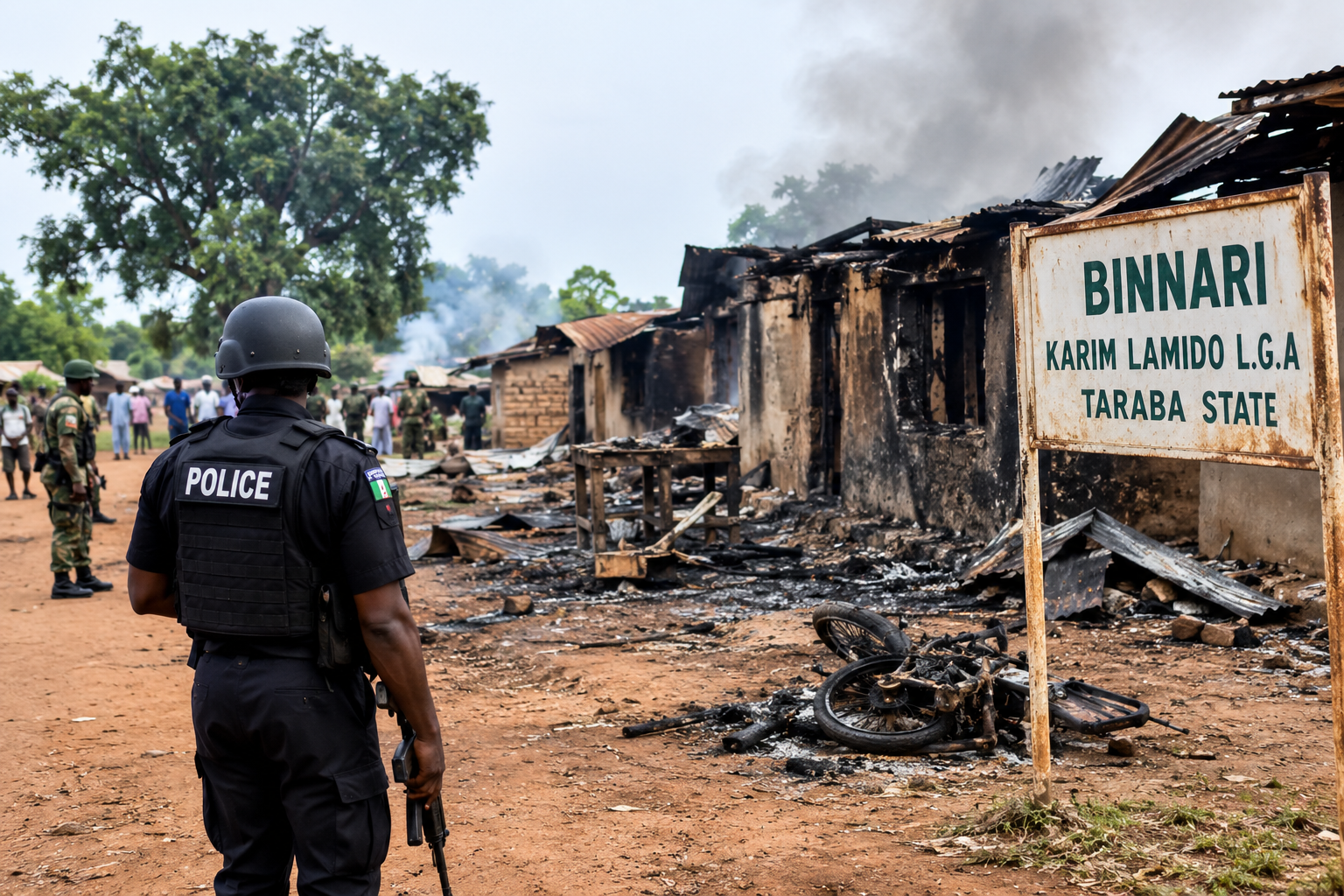
At least 40 people have reportedly been killed after gunmen attacked Binnari community in Karim Lamido Local Government Area of Taraba State, raising fresh concerns about the security of rural communities in northeastern Nigeria.
The attack occurred on Friday, October 23, 2026, shortly after Jumu’ah prayers, according to reports from the area.
The Taraba State Police Command initially confirmed that 10 people had been killed. However, Amnesty International Nigeria later reported a significantly higher death toll of at least 40, saying additional bodies had been recovered.
The difference between the two figures has drawn attention to the scale of the violence, while questions remain about the final number of victims and the circumstances surrounding the attack.
Binnari Attack in Taraba: What Happened?
The Binnari attack in Taraba occurred when a large group of armed men reportedly invaded the community and opened fire on residents.
According to the police, the attackers arrived in the village with heavy gunfire, causing panic among residents. The assailants also reportedly looted food items from shops during the operation.
The attack happened at approximately 3 p.m. on Friday, shortly after Muslim residents had attended Jumu’ah prayers.
Police officers were subsequently deployed to the community after authorities received reports of the incident.
The initial police account stated that officers recovered 10 bodies bearing gunshot wounds. The bodies were later handed over to families for burial in accordance with Islamic rites.
However, Amnesty International said more bodies were recovered later on Saturday, increasing the reported death toll to at least 40.
The organisation also reported that some residents remained missing following the violence.
The conflicting figures underline the need for further investigation and a clearer account of the casualties.
Amnesty International Reports at Least 40 Deaths
Amnesty International Nigeria condemned the Binnari attack and called for an impartial investigation into the killings.
The human rights organisation said at least 40 people had died, adding that more bodies were still being discovered after the initial police report.
Amnesty also reported that homes, shops, motorcycles and food supplies were destroyed during the attack.
According to the organisation, the violence left families searching for missing relatives and residents facing the aftermath of a devastating assault.
Amnesty criticised what it described as the continuing failure to adequately protect vulnerable rural communities from repeated attacks by armed groups.
It called on the authorities to identify those responsible, investigate the killings and ensure that victims and survivors receive appropriate support and reparations.
However, the reported figure of 40 deaths remains Amnesty International’s account and should not be confused with an independently verified final casualty total.
Further official information will be important in establishing the full scale of the incident.
Police Confirm Attack and Deploy Security Personnel
The Taraba State Police Command confirmed the attack on Binnari and said security personnel had been deployed to the affected community.
Police spokesperson Victor Mshelizah said officers responded after receiving information about the incident.
The command also announced additional security measures aimed at preventing further violence and protecting residents.
According to the police statement, tactical officers, Police Mobile Force personnel, conventional police officers and other security agencies were involved in the reinforcement effort.
The Commissioner of Police in Taraba State, Edwin Ogbegaghagha, reportedly directed security personnel to maintain coordinated operations and take necessary steps to apprehend those responsible.
The command urged residents to remain calm, avoid spreading unverified information and report suspicious movements to the appropriate authorities.
The deployment is intended to restore confidence and prevent further attacks. However, the available reports do not establish that the perpetrators have been arrested.
Residents Face Losses After the Binnari Attack
Beyond the reported deaths, the attack has raised concerns about the safety and livelihoods of people living in Binnari.
Amnesty International said properties, including homes, shops, motorcycles and food supplies, were burnt during the incident.
The destruction of food stocks and commercial property can leave affected families facing immediate difficulties, particularly in communities where residents depend on local shops, farming and small-scale trading.
Families searching for missing relatives also face uncertainty as they attempt to establish what happened to loved ones during the violence.
The reported destruction means the consequences of the attack may extend beyond the immediate casualty figures.
Residents who have lost homes, goods or sources of income may require assistance as security agencies work to stabilise the area.
The full extent of the damage and the number of people requiring assistance had not been independently established in the available reports.
Taraba Governor Condemns the Killings
Taraba State Governor Agbu Kefas condemned the killings and called for those responsible to be identified and brought to justice.
The governor’s response followed the attack on Binnari, which has renewed concerns about the protection of communities exposed to armed violence.
Calls for justice have also come from Amnesty International, which urged authorities to conduct an impartial investigation and provide support for survivors.
Condemnations and promises of investigation are important, but residents will also be looking for practical measures that can improve security and prevent similar incidents.
These measures may include stronger security coordination, timely responses to threats and effective investigations into attacks against civilians.
The available reports do not establish that arrests have been made or that the investigation has been completed.
Why Rural Communities Remain Vulnerable to Attacks
The Binnari attack adds to continuing concerns about armed violence in parts of northern Nigeria.
Communities in affected areas have faced attacks involving armed groups, with incidents sometimes resulting in deaths, property destruction, displacement and the loss of livelihoods.
Criminal gangs commonly described as bandits have been linked to raids on villages, kidnappings for ransom and the theft of livestock and other property.
However, the identities and specific motives of the gunmen responsible for the Binnari attack have not been conclusively established in the reports available so far.
It would therefore be premature to assign responsibility to a particular group without further evidence.
The incident highlights the importance of investigating attacks thoroughly, protecting civilians and ensuring that information released to the public is accurate.
It also raises questions about the security arrangements available to residents of vulnerable rural communities.
What Happens Next After the Binnari Attack?
The immediate priorities following the attack include establishing the final casualty figure, locating missing residents, supporting affected families and identifying those responsible.
Security agencies are expected to continue operations in the area as authorities seek to prevent further violence.
A clearer official account of the casualties would help resolve the difference between the initial police figure and Amnesty International’s higher estimate.
Investigators will also need to establish the circumstances surrounding the attack and determine whether there were warning signs that could have helped prevent it.
For affected residents, restoring security and obtaining assistance for damaged homes, shops and other property will be important steps towards recovery.
As of October 25, the available reporting does not establish a final independently verified death toll or confirm that suspects have been arrested.
NEWSSORA will continue to monitor official updates as more reliable information becomes available.
Conclusion
The Binnari attack in Taraba has renewed concerns about the safety of rural communities in Nigeria following reports of mass killings on October 23.
Police initially confirmed 10 deaths, while Amnesty International reported that at least 40 people had been killed after more bodies were recovered.
The difference between the figures remains important, and the final casualty total requires further confirmation.
With investigations and security operations continuing, attention is now focused on protecting residents, supporting affected families and ensuring that those responsible are brought to justice.